
LISTEN · കേൾക്കാം
Listen to this article
English audio for this article is not available yet.
Listen to this article
Text-to-speech is unavailable in this browser.
By Rev. Fr. Johnson Punchakonam | November 19, 2026
Scripture: Matthew 3:13–17; John 3:3–5; Genesis 32:22–30; Joshua 3; 2 Kings 5:1–14; Romans 6:3–11; Titus 3:5.
Central message: Holy Baptism is not merely washing with water. It is participation in the death and Resurrection of Jesus Christ, rebirth through the Holy Spirit, and entrance into the sacramental life of His Church.
1. Three Rivers, One Jordan, and One Divine Mystery
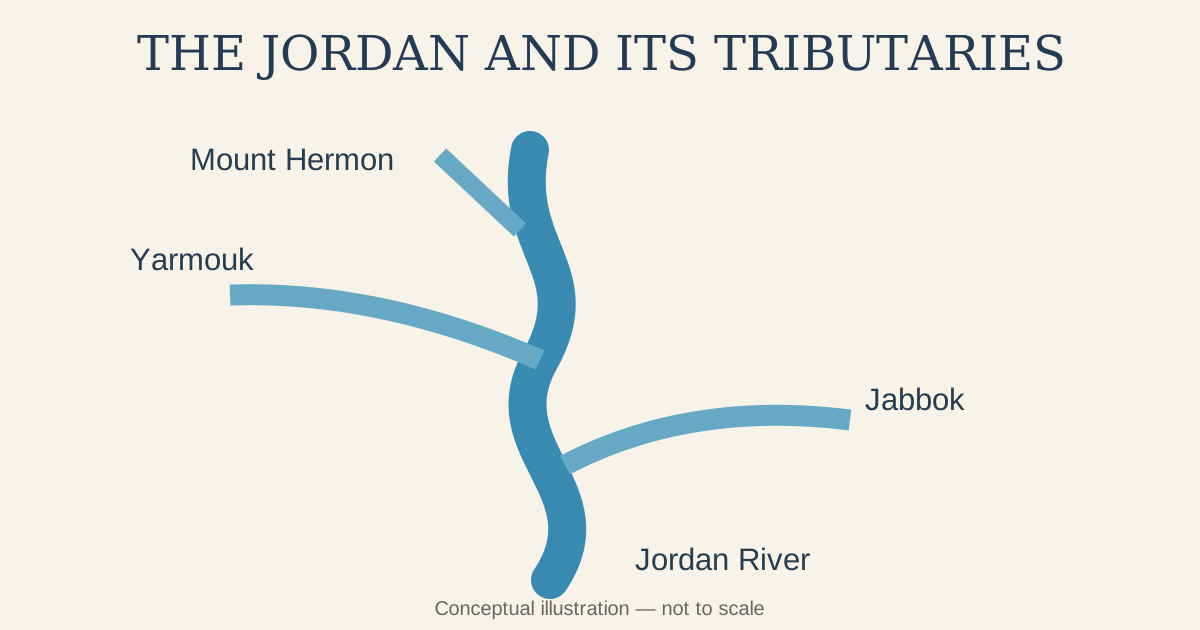
“The coolness of Hermon, the warmth of Yarmouk, and the fragrance of Jabbok come together in the waters of the Jordan.” This poetic image invites reflection, but it must not be confused with a verified ancient Syriac quotation or an official baptismal formula. Hermon is a mountain region, not a river; its precipitation and springs contribute to the Jordan headwaters. The Yarmouk and Jabbok are tributaries joining the Jordan downstream. Their alleged warmth and fragrance are not established geographical properties.
As devotional imagery, coolness can suggest peace and renewal, warmth the transforming work of the Spirit, and fragrance the holiness of life in Christ. These are homiletic analogies, not official meanings assigned to these rivers by the Church.
2. Hermon: Refreshment and the Grace of God
Psalm 133:3 evokes the dew of Hermon as a poetic image of blessing. The Hermon region contributes to the waters that feed the upper Jordan. Jesus calls the thirsty to come to Him and drink (John 7:37–39); the Evangelist relates this living water to the Holy Spirit. The coolness of mountain water can remind us of divine peace, but the saving grace of Baptism does not depend upon the physical temperature of the water.
Salvation is God's gift (Ephesians 2:8). Baptism calls us into a life of healing, repentance, communion, and holiness, not simply an external religious identity.
3. The Yarmouk: Warmth and the Fire of the Spirit
The Yarmouk is a significant tributary of the Jordan, but Scripture does not identify it as a naturally warm river. As a spiritual analogy, warmth may recall John the Baptist's proclamation that Christ will baptize with the Holy Spirit and fire (Matthew 3:11). Biblical fire can signify purification, divine presence, and judgment; at Pentecost, tongues as of fire accompany the descent of the Spirit (Acts 2:1–4).
Jesus tells Nicodemus that one must be born of water and the Spirit (John 3:5). In the Orthodox understanding, Baptism is a mystery of regeneration and incorporation into Christ. Some West Syriac descriptions refer to mixing warm and cold water in the baptismal font. It would nevertheless be inaccurate to assert that the warm water officially represents the Yarmouk or the cold water Hermon without a primary liturgical source.
4. The Jabbok: Jacob's Struggle and a New Identity
Genesis 32:22–30 describes Jacob's mysterious night of wrestling after crossing the Jabbok. His struggle culminates in a new name: Israel. This is not itself a Christian Baptism, but it offers a compelling analogy of transformation in an encounter with God.
St. Paul teaches that anyone in Christ is a new creation (2 Corinthians 5:17). Scripture does not describe the Jabbok as fragrant. Yet Paul describes Christians as the fragrance of Christ (2 Corinthians 2:15). The authentic fragrance of the baptized life is forgiveness, compassion, holiness, and love.
5. Joshua Crosses the Jordan: From Wilderness to Promise
In Joshua 3:14–17, the priests carrying the Ark stand in the Jordan while the people cross on dry ground into the Promised Land. Christian typology can understand this crossing as an image of entrance into new life. The movement from bondage to freedom, wilderness to promise, and fear to trust invites Christians to contemplate their own passage into life with Christ. Such typology should not be confused with a claim that Joshua explicitly instituted Christian Baptism.
6. Naaman in the Jordan: Humility and Obedience
In 2 Kings 5:1–14, Naaman initially resists Elisha's instruction to wash seven times in the Jordan. When he obeys, he is cleansed. His healing is not attributed to special minerals or the river's temperature but to God's action. Christian tradition reads Naaman's cleansing as a figure of purification. The narrative also exposes pride: divine grace often meets us through humble, seemingly ordinary means.
7. The Baptism of Christ: The Revelation of the Trinity
Matthew 3:13–17 is the decisive Christian event associated with the Jordan. Jesus comes to John and is baptized, not because He needs cleansing from sin (Hebrews 4:15), but to fulfill righteousness and reveal His saving mission. The Son stands in the water, the Spirit descends like a dove, and the Father's voice declares His beloved Son.
This manifestation is celebrated as Theophany, or Denaha, in the Orthodox liturgical tradition. The Church Fathers speak of Christ's Baptism in relation to the sanctification of the waters. The central truth is that the sinless Savior enters the waters for the renewal of humanity.
8. The Syriac Tradition: Water, Fire, Light, and Fragrance
St. Ephrem the Syrian's hymns on the Epiphany employ rich biblical imagery to celebrate the Baptism of Christ and divine revelation. Water speaks of life and purification; fire can evoke divine holiness; light speaks of revelation. His poetic theology should be studied in its original context. The Hermon–Yarmouk–Jabbok saying has not been verified as a quotation from St. Ephrem and should not be attributed to him.
St. Gregory of Nazianzus also reflects deeply on the Baptism of Christ in his Orations 39 and 40. St. Cyril of Jerusalem's Mystagogical Catecheses illuminate the sacramental meaning of Christian initiation.
9. The Baptismal Water and Holy Myron in the Malankara Orthodox Church
In the Malankara Orthodox Syrian Church, Holy Baptism is celebrated through the prescribed prayers and sacramental actions of the Church. The blessing of water invokes God's grace and recalls His saving works. Water is not a magical substance: God acts through the sacramental means of the Church.
Holy Myron, the consecrated oil used in the Church's sacramental life, signifies consecration and the believer's participation in the life of the Holy Spirit. Its liturgical significance must be distinguished from the unverified poetic claim about the Jabbok's fragrance. Baptism also belongs to the larger life of the Church, including anointing, the Holy Eucharist, worship, and ongoing repentance.
10. Baptism: Death and Resurrection with Christ
Romans 6:3–11 offers a foundational explanation: those baptized into Christ are baptized into His death, and as Christ was raised, they are called to walk in newness of life. Entering and rising from the water express this paschal mystery. Baptism is more than a personal religious label: it is incorporation into Christ's Body and a lifelong vocation to holiness.
11. Why the Orthodox Church Baptizes Infants
The Malankara Orthodox Church practices infant Baptism because Baptism is understood as a gift of grace and entrance into the Church, not merely a public declaration following mature intellectual consent. Acts 2:38–39 speaks of the promise to believers and their children. Acts 16:14–15 and 31–34 describe household baptisms, though these passages do not explicitly say infants were present. Colossians 2:11–12 relates Baptism to circumcision, while Mark 10:13–16 reveals Christ's welcome of children. These texts are understood within the Church's apostolic and liturgical tradition.
Parents, godparents, and the community are responsible for nurturing the child in prayer, worship, repentance, and Eucharistic communion.
12. Five Spiritual Lessons from the Jordan
- Purification: Like Naaman, approach God in humility and obedience.
- A new beginning: Like Israel crossing the Jordan, trust God's promise beyond fear.
- The Holy Spirit: Remember the revelation at Christ's Baptism and seek divine grace daily.
- Transformation: Like Jacob at the Jabbok, allow an encounter with God to change your life.
- New creation: Live your Baptism as participation in the risen Christ.
13. Questions for Reflection
Why was the sinless Jesus baptized? To fulfill righteousness, identify with humanity, and reveal His saving mission (Matthew 3:15).
Does water save through its own natural properties? No. The saving action belongs to God, through Christ and the grace of the Holy Spirit.
Are the three rivers an official Syriac baptismal formula? No verified primary text establishes that claim.
What if a baptized Christian falls into sin? The Church calls the believer to repentance, confession, prayer, and renewed sacramental life.
How is Baptism related to the Eucharist? Baptism incorporates us into the Church, where communion with Christ is nourished through the Holy Eucharist.
14. Conclusion: More Than a River
At the Jabbok, Jacob's encounter brought a new identity. In the Jordan, Naaman was cleansed through obedience. Across the Jordan, Israel entered the land of promise. And in the Jordan, Jesus Christ was baptized and the Holy Trinity was revealed.
We may poetically speak of Hermon's coolness as peace, Yarmouk's warmth as divine love, and Jabbok's fragrance as holiness. But it is not the temperature, fragrance, or natural properties of water that save us. It is Jesus Christ, crucified and risen, who grants new life through His saving grace.
The essential question is not merely whether we have received Baptism, but whether we are living faithfully in its grace.
15. Closing Prayer
O Holy Trinity, Father, Son, and Holy Spirit, we thank You for the love revealed through the Baptism of our Lord Jesus Christ in the Jordan. Help us understand the sacred mystery of our Baptism. Purify our hearts, renew our minds, and strengthen us through the Holy Spirit. Bless our children, families, godparents, and the entire Church. May we become the sweet fragrance of Christ through humility, forgiveness, and love. To You be glory, now and always and forever. Amen.
References and Further Reading
- Holy Scripture: Genesis 32; Joshua 3; 2 Kings 5; Matthew 3; John 3; Romans 6; Titus 3.
- St. Ephrem the Syrian, Hymns on the Epiphany.
- St. Gregory of Nazianzus, Orations 39 and 40.
- St. Cyril of Jerusalem, Mystagogical Catecheses.
- The Order of Holy Baptism, Malankara Orthodox Syrian Church.
Editorial note: The three-river imagery is devotional and is not presented as a verified ancient Syriac quotation or official liturgical interpretation.
FROM THE ORTHODOX TV ARCHIVE
Love God & Love Life.
PASS IT ON
Share this reflection.